
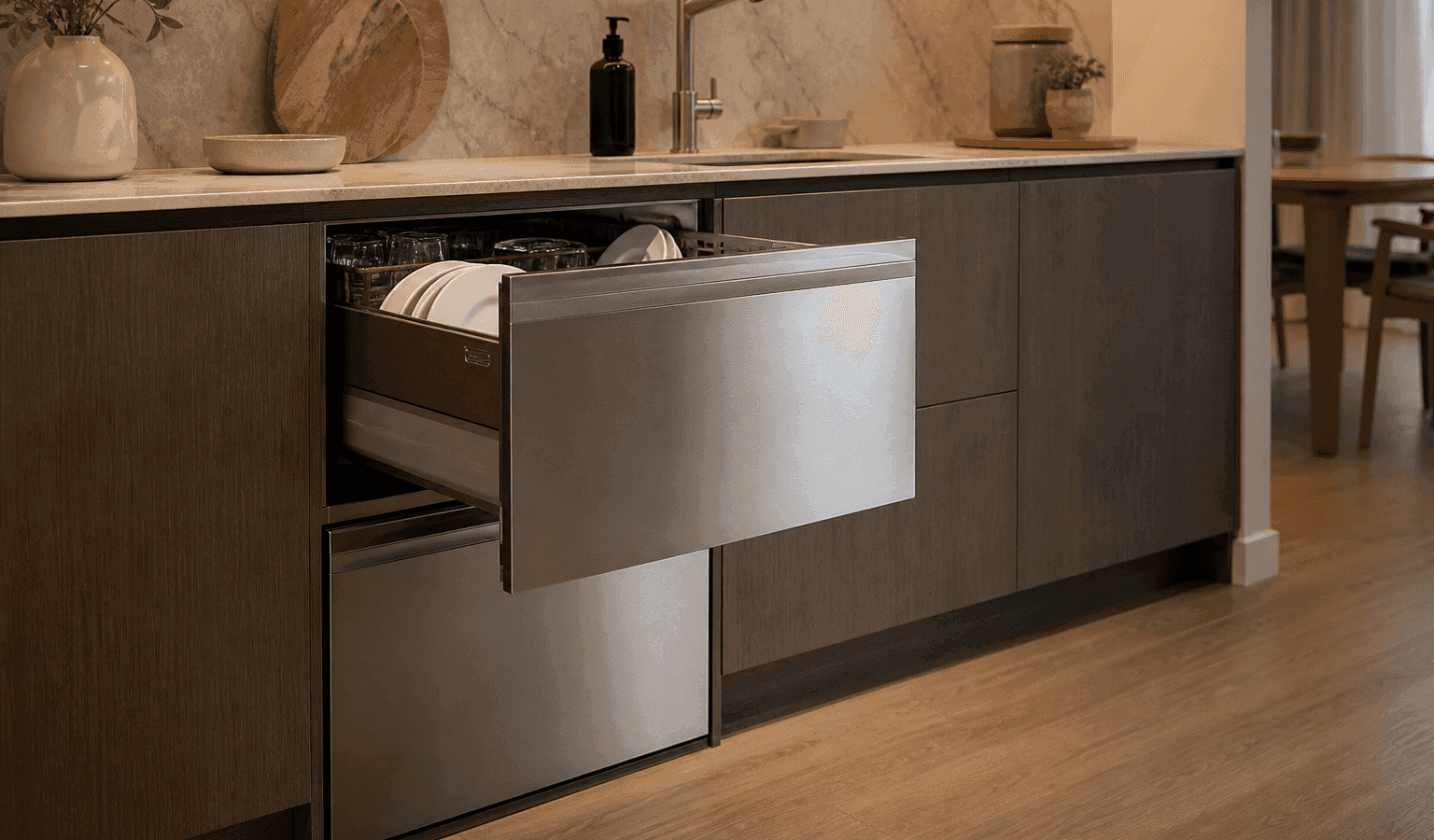
Repeated beeping from a DCS DishDrawer can indicate an open drawer, a detected error, a water or drainage problem, or a control input that is not being satisfied.
Beeping is a symptom, not a diagnosis. The most useful information is what the DishDrawer is doing at the same time: refusing to start, stopping mid-cycle, displaying a code, or continuing to beep even when the drawer appears closed.
If your appliance is still operating, avoid jumping directly to a parts replacement. Start with the simple conditions you can verify safely, then use the remaining symptoms to decide whether the issue is likely to need professional testing.
More than one condition can be present at the same time. For example, a small airflow restriction can become a noticeable cooling problem during hot weather, or a dirty burner can become difficult to ignite immediately after a spill. The model number and the exact sequence of symptoms matter.
Do not remove energized panels, bypass safety switches, modify gas components, or continue operating an appliance that is leaking, overheating, repeatedly tripping a breaker, or producing a persistent gas odor.
Different generations can use different audible patterns, and the same beep count should not be interpreted without the model number. A displayed code is usually more useful than the sound alone. Record both the sound pattern and any letters/numbers you see.
This detail is useful because it changes the diagnostic direction. Note what the appliance was doing immediately before the symptom appeared, whether the problem is constant or intermittent, and whether another function still works normally.
A single controlled restart can be useful when an electronic control appears frozen or the problem followed a brief power interruption. Use the normal appliance disconnect, power button, or breaker only when the user guide allows it.
A reset does not repair a recurring mechanical, gas, water, heating, refrigeration, sensor, wiring, or electronic problem. If the same symptom returns after normal operation resumes, repeated power cycling is more likely to delay diagnosis than solve the issue.
If beeping is accompanied by leaking, burning smell, repeated breaker trips, or a drawer that will not stop running, disconnect power safely and arrange service.
Home troubleshooting should stay limited to owner-accessible cleaning, settings, loading, ventilation, visible hoses, cookware, and other checks specifically intended for the user. Internal electrical testing, gas-pressure work, sealed refrigeration work, and powered mechanical repairs require appropriate training and equipment.
The same outward symptom can come from more than one cause. The useful evidence is the pattern: what still works, what changed first, whether the problem is constant or intermittent, and whether it affects one zone or the whole appliance.
Start with owner-accessible conditions and the exact model number. Parts should follow diagnosis, not replace it.
If the basic checks do not change the symptom, a technician can test the relevant dishdrawer components under operating conditions instead of replacing parts by guesswork. When you book service, provide the full DCS model number, serial number, any displayed code or light pattern, and a short description of when the problem occurs. That information helps narrow the correct product generation and diagnostic procedure.
Professional diagnosis is especially worthwhile when the symptom is intermittent. A technician can often use model-specific service information, component measurements, and stored diagnostic information that are not available from a visual inspection alone.
DCS DishDrawer repair for draining, filling, leaking, beeping, lid, motor, spray-arm, cleaning, and generation-specific error-code problems.
The drawer may not be confirming closure, or another condition such as water supply, a stored error, or a control input may be preventing the cycle from starting.
It may silence a temporary electronic condition, but recurring beeps mean the underlying condition still needs to be identified.
No. DCS used several DishDrawer generations with different controls and code systems.
Standing water in a DCS DishDrawer can come from a blocked filter, restricted drain hose, sink connection, pump obstruction, or a drain-system component issue.
Poor cleaning in a DCS DishDrawer is often connected to loading, spray-arm movement, filters, detergent, water temperature, or reduced wash circulation.
A DCS DishDrawer that has lights or power but will not start may be waiting for a closed-drawer signal, water supply, valid control input,…
Share a few details and we’ll confirm an appointment. Prefer to talk? Call us and we’ll help right away.
Fields marked with * are required.